
Research
Host defense systems are essential for survival and ubiquitous across the tree of life.
In animals, host defense involves direct killing of pathogens, as well as sickness, a state of altered physiology and behavior that arises from brain-immune system interactions.
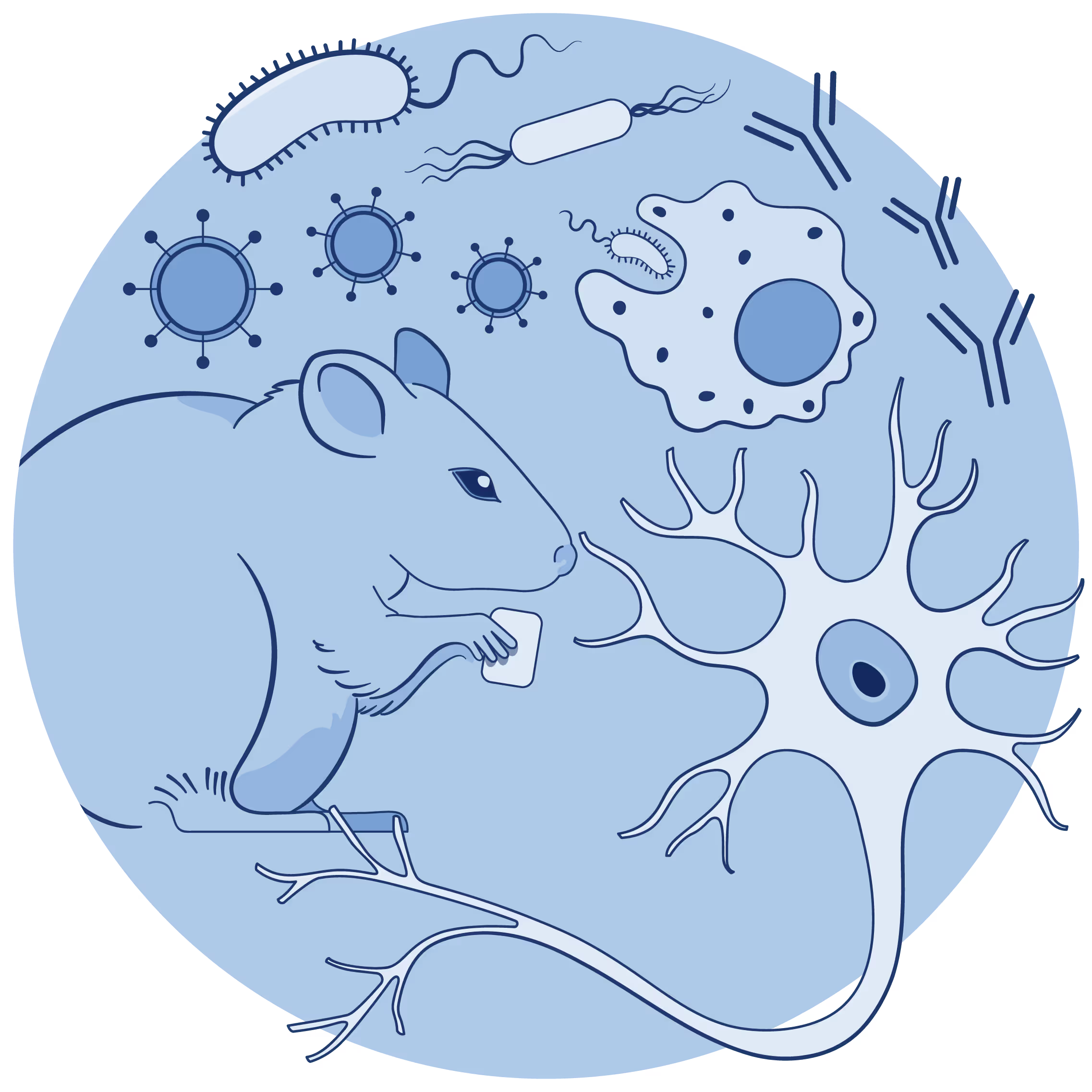
Sickness as a host defense strategy
Our lab aims to define the mechanisms by which neuroimmune interactions lead to sickness, and how sickness influences host and microbial fitness – how and why infections make us sick.

How infections make us sick
Neuroimmune mechanisms underlying sickness
Sickness is characterized by behavioral and physiologic changes such as fever, anorexia, and social withdrawal. We are interested in the mechanistic basis of these changes – how they arise from communication between the immune system and the brain. Importantly, we conduct a majority of our studies in the context of live pathogen models, enabling us to understand how the complex interplay between host and pathogen influences the generation of sickness across the time course of an infectious challenge.
The foundation of this work is our discovery that different pathogens elicit distinct sickness states, characterized by unique repertoires of behavior, neural activity, and gene expression programs across pathogens. A major goal of our work is to elaborate the mechanisms by which brain-immune system interactions lead to the generation of these pathogen-specific states.
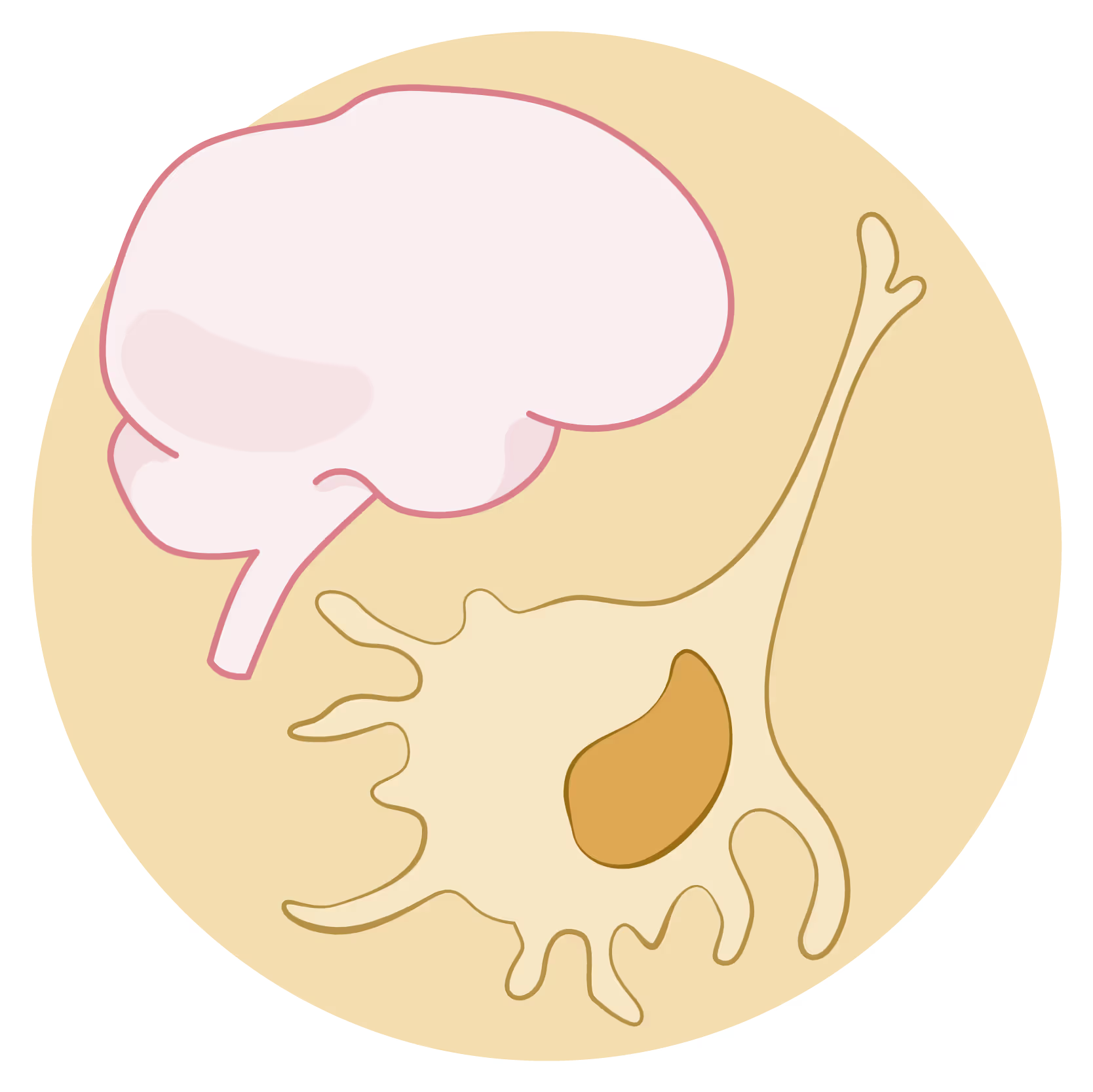
Why infections make us sick
Contributions of sickness to host and microbial fitness
Is sickness adaptive, or is it an inevitable, unintended consequence of infection? A second, major goal of our work is to leverage the tools of molecular neuroscience in conjunction with classical host-pathogen experimental paradigms to assess how sickness influences host and microbial fitness.
By studying neuroimmune control of sickness in live pathogen models, we can directly assess the contribution of sickness to pathogen control and host survival. Our ultimate goal is to understand sickness as a host defense strategy.

